
Brasilidade Empresarial · Interview
Adriana Carneiro: what stays non-negotiable when everything else changes
Published on 23 March 2026. Interview by Fabiana Di Pietro. Originally published in Portuguese; this is a translation.
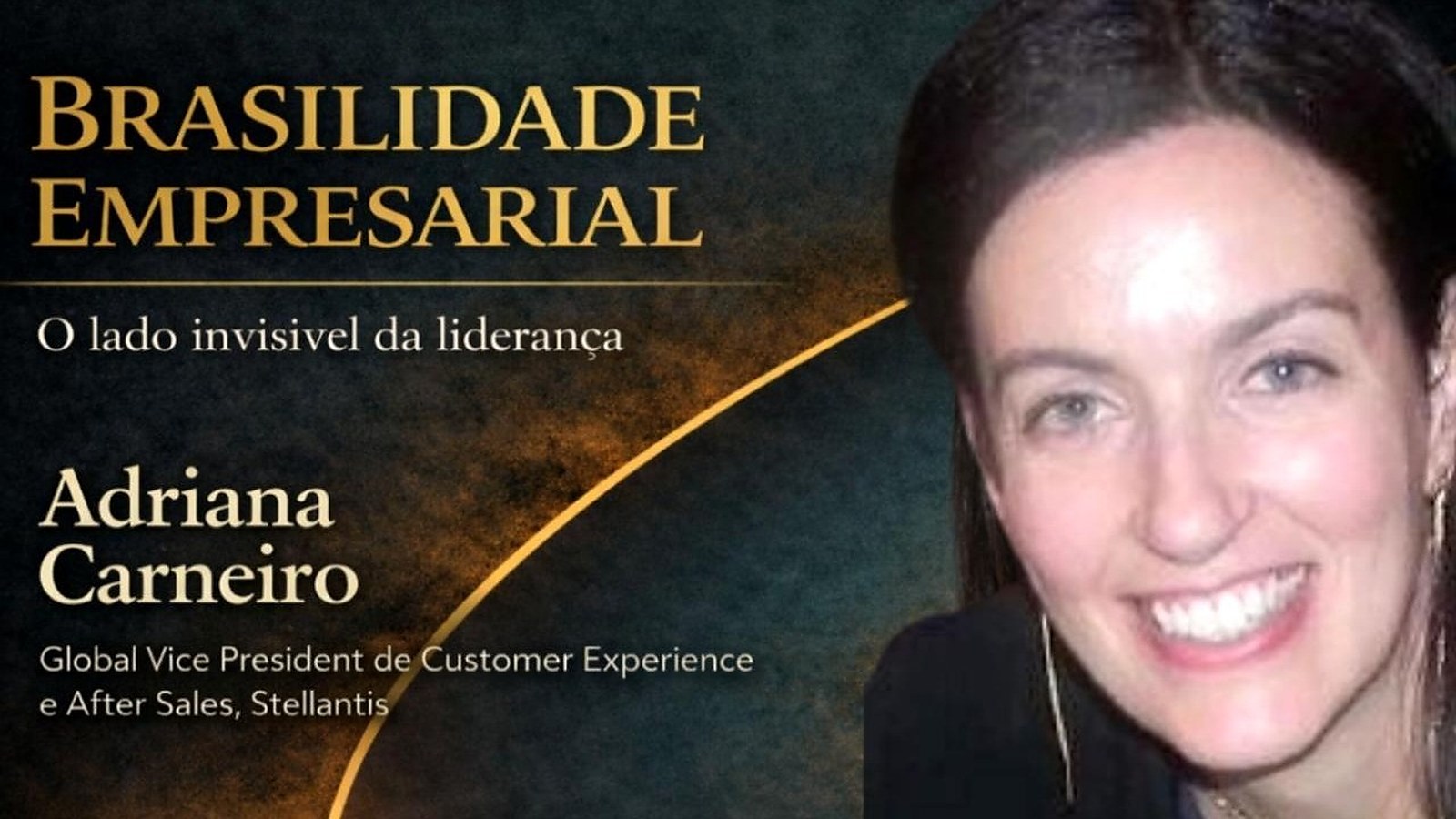
Adriana Carneiro Ribeiro built her international career leading quality and industrial operations in major automotive groups, in countries including Romania, Russia, Japan and France, adjusting how she worked to each context without giving up what she believes in.
In this conversation we look at what guides decisions in environments undergoing change: from personal formation to choices of leadership, from cultural context to what stays non-negotiable when everything around you shifts.
I would like to start by going back to the beginning of your career. You built a consistent international path before reaching global leadership, but job titles do not explain the inner logic of a career. Before any of it had a name and a set of responsibilities, what was already driving you?
From the start, what drove me was the search for autonomy and exposure to different professional and cultural contexts. I was always clear that I wanted to build an international career, with experiences that would widen my ability to read situations and make decisions.
I was formed in an environment that valued individual responsibility and merit, and that settled an important foundation: the conviction that results follow directly from understanding the business and the customer, along with discipline, consistency and the ability to deliver.
And how did that effort and that confidence translate into practice over your career? At what point did that foundation stop being just a reference point and start guiding your decisions consciously?
Over time it stopped being merely a trait of character and became a conscious criterion for deciding.
I began to steer my decisions by impact and by exposure to complexity, favouring roles with direct responsibility for results and for change, even when that meant more risk or a change of setting.
Moving into such different international contexts, how did you work out how to position yourself in them?
My approach has always been to read the context before acting. In international environments I make a point of understanding the local dynamics deeply, cultural, organisational and decision-making, before settling on a position.
The adaptation happens in the form, never in the substance. I adjust my style of communication and interaction to the context, while keeping my principles and decision criteria consistent.
That approach lets me not only adapt but also reach alignment faster and secure consistent delivery across very different environments.
On those differences, was there a particular context that struck you in the way professional relationships are built?
France taught me something important about maturity in professional relationships. There is a clear separation between technical debate and personal relations, which allows a high level of constructive disagreement without any effect on collaboration.
That model reinforces a culture of constructive challenge, which markedly improves the quality of decisions. Technical debate should be encouraged as a way of finding the best solutions, always kept separate from personal matters.
It puts the interest of the organisation and the customer above individual dynamics.
When did it become clear to you that it is often the relationship, not just technical delivery, that defines the customer's experience and perception?
That understanding settled as my work moved closer to the business and to the end customer.
It became obvious that technical excellence on its own does not guarantee that value is perceived. The customer's experience is defined by how the product is used, understood and fitted into their own context.
From there I built models to bring different areas together, engineering, markets and after-sales among them, bringing the customer's voice in from the earliest stages of development. That made it possible to anticipate failures, cut the cost of poor quality and raise customer satisfaction consistently.
You said something very concrete about bringing engineering and markets together. In your work as a leader, what does not show up in the indicators but is essential for those results to happen?
The critical factor is organisational orchestration: making sure decisions across functions are joined up, with the customer at the centre, before issues turn into gaps in performance.
That capability is what sustains consistent results over the medium and long term.
You built your career in demanding environments, often in settings where you were not the expected profile. What did that teach you about how to hold your ground when the environment was not designed for you?
I learned that consistency of position and sustained delivery are the main sources of credibility. Over time, consistent results tend to redefine expectations and standards inside the organisation.
There have been many changes: of context, of culture, of responsibility. When everything shifts, what do you not negotiate?
Responsibility and commitment to the result, for the customer and for the company, are not negotiable.
In practice that means a clear order of priorities: protect the customer's experience, protect the sustainability of the business and secure executive alignment. That framework guides decisions, particularly in highly complex situations.
That consistency is what allows you to navigate complex situations while keeping your decisions coherent and your delivery credible.
Are you a Brazilian leader working in Italy or in Europe?
The Brasilidade Empresarial Executive Community brings together Brazilian executives to share experience, widen connections and turn individual journeys into collective intelligence.